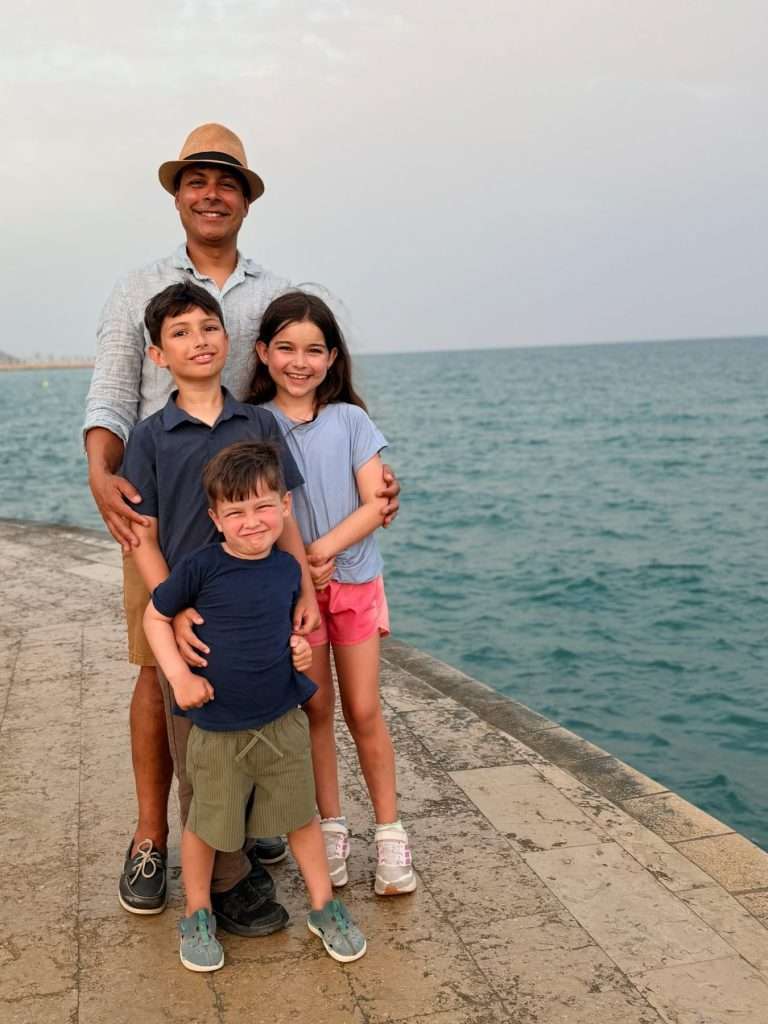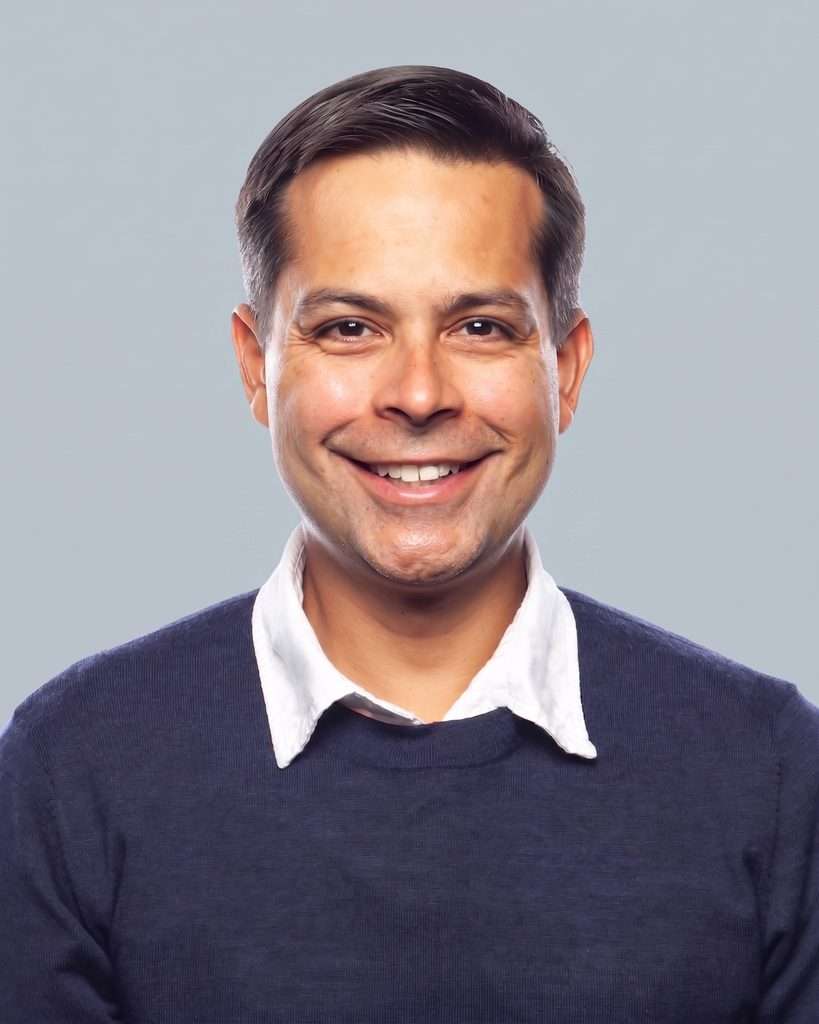
In our next installment of Meet the Founders, we introduce Marcelino Alvarez, CEO of Photon Marine. Raised in South Florida fishing and scuba diving in the Keys, Marcelino earned his bachelor’s degree in Political Science with a concentration in International Relations from Duke University.
Marcelino began his career in advertising, mastering storytelling alongside top creative minds. He then founded Uncorked Studios, a product design and innovation firm where he spent the 2010s bringing digital and physical products to market for brands like Nike, Google, and Samsung. Marcelino co-founded Photon Marine and has served as CEO since January 2022.
Where did the idea for Photon Marine come from? Why was this a problem you cared about solving?
As a lifelong boater, I saw companies making low-horsepower electric outboards, but no one was building the high-horsepower systems that commercial working boats need. I connected with my co-founder and CTO, Nick Schoeps, who had a background in electric motorcycle design. Nick emphasized a key reality: the physics of pushing a boat through water are brutal, so electrification only makes sense for specific use cases.
During the pandemic, I attended virtual electrification conferences and noticed case studies on electric bus fleets—vehicles with predictable, repeatable duty cycles. It clicked: the primary market for marine electrification isn’t recreational boating; it’s commercial operators running known routes and schedules. Ports, utilities, aquaculture, dive tourism, crew transport, and marine enforcement all run fixed hours. These operators care about the bottom line, and electric simply became the better, more efficient tool for the job.
What is the vision for Photon Marine? Where are you now vs. the long-term vision?
Today, we are delivering our first production systems to customers and proving our model port by port—including a project decarbonizing the Port of Friday Harbor in the San Juan Islands across vessels, chargers, and a solar microgrid.
Our broader vision is to become the propulsion and intelligence platform for global commercial fleets. Commercial marine remains one of the last major sectors to decarbonize, with tens of millions of gas-powered vessels and rapidly shifting economics. Our hardware provides the entry point, while our software and fleet data build the moat—every vessel we launch makes the broader fleet smarter. We are leveraging the ~$9B commercial outboard market as our initial beachhead before expanding into water taxis, small passenger vessels, and harbor craft, representing a $50B+ fleet-electrification opportunity.
Where did the name Photon Marine come from?

The name connects clean energy generation directly to propulsion. A photon is the fundamental particle of light—the raw input of solar energy. I wanted a name pointing toward systems that are truly powered by renewables. While our boats will not be solar-powered directly, pairing solar microgrids with on-water recharging was always our vision. We are seeing this come to life at the Port of Friday Harbor and through our ChargeBarge, a dedicated charging vessel designed to leverage solar power to recharge fleets on the water.
Tell us about the technology. What makes it novel?
We built the first electric outboard motor engineered specifically for commercial work rather than scaling up a consumer product. Delivering 300 HP peak, 150 HP continuous, 500 Nm of torque, and modular battery packs, the system integrates seamlessly onto new or existing vessels.
What makes it novel is combining rugged hardware with intelligent software. On the hardware side, we prioritize efficiency, robustness, and reliability. On the software side, every vessel feeds an expanding dataset of real-world electric propulsion intelligence that powers fleet management, energy optimization, predictive maintenance, ESG reporting, and remote operations. Built for commercial realities, our systems can be serviced without hauling the boat out of the water and operate on a ~1,000-hour maintenance cycle compared to 100–300 hours for standard gas engines. Hardware is our wedge; software and data are our moat.
How have you iterated on the product since launch?
We launched in January 2022 and spent the early years deep in R&D, learning directly from commercial operators. We took a capital-efficient approach: rather than building everything in-house immediately, we replaced the gas engine in an existing outboard with an electric motor to validate that our software could push a real boat. This let us isolate and test risks one at a time.
We placed our first prototype in the water within five months of going full-time, followed by a second-generation prototype six months later. Across roughly seven iterations, that early design evolved into our production system, with initial customer units delivering this year.
Which accelerator programs have you participated in, and how did they help?
We completed Washington Maritime Blue in 2022, connecting with ocean-tech mentors, boat builders, and commercial operators while sharpening our hardware scaling strategy. We then participated in Creative Destruction Lab’s Oceans stream, which expanded our global network across Canada and Europe and refined our go-to-market approach.
What’s next on the horizon for Photon Marine?
Beyond delivering our first customer units this year, we won a $7M grant backed by WSDOT to equip the Port of Friday Harbor with four electric workboats, high-speed chargers, a solar canopy, a microgrid, and an electric boat lift—establishing a global model for port decarbonization. We are also continuing our multi-year partnership with the New York Power Authority on their hydraulic dredge operations on the Erie Canal, shipping a production boat this year. Additional vessels are heading to Michigan, California, and Washington, alongside new prototype designs in the water-taxi class. To meet growing demand, we are closing a financing facility to support our next growth chapter.
Outside of work, what do you do for fun?
No surprise — I’m happiest on or near the water. Spending a sunny day boating or at the beach with family is how I recharge. When I cannot get on the water, running or cycling along the shoreline is a close second.
Marcelino is an exceptionally talented founder driving meaningful decarbonization across commercial marine, and we are thrilled to support Photon’s journey.